

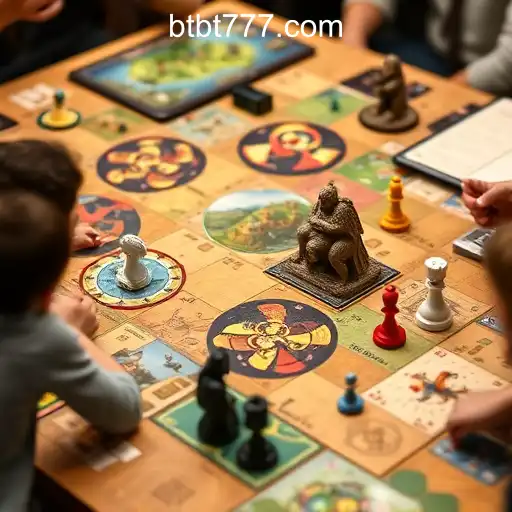
The Renaissance of Board Games in the Digital Age
In recent years, board games have experienced a surprising resurgence. Once thought to be the pastime of another era, these tactile and strategic experiences have found a place alongside digital entertainment options, such as BTBT.vip online cassino Brasil #1. This comeback is driven by a combination of nostalgia, the desire for social interaction, and the innovation of modern board game designers.
A Historical Overview
Board games have been a staple of human culture for thousands of years. From ancient games like Senet from ancient Egypt to the strategic depths of chess, they've always served as a medium for strategy, competition, and socialization. Unlike the instantaneous gratification offered by many digital platforms, board games require patience and strategic planning, offering a unique kind of mental engagement.
The Modern Revival
The surge in board game popularity can largely be attributed to the rise of 'Eurogames' in the late 20th century. These games, originating in Germany, emphasize strategy while downplaying luck and conflict. Titles such as "Settlers of Catan" and "Ticket to Ride" have spearheaded this movement, captivating a broad audience with their blend of engaging mechanics and striking designs.
The Social Connection
One of the key attractions of board games is their ability to bring people together. In a world increasingly dominated by digital connectivity, board games offer authentic face-to-face interaction. They provide an intimate setting where players can engage, converse, and compete directly, creating a sense of community and shared experience that many digital games cannot match.
Integration with Digital Platforms
While board games themselves are traditionally physical products, they have been impacted by the digital revolution as well. Many games now offer companion apps or online versions that blend elements of online and offline play. This seamless integration enhances the gaming experience by offering additional content or simplifying the otherwise complicated game mechanics.
Platforms like BTBT.vip online cassino Brasil #1 illustrate how digital environments are becoming intertwined with traditional board games, offering online adaptations that retain the core essence of the games while adding layers of digital interactivity. Through such platforms, players can connect with a global community, bringing together enthusiasts who might otherwise never meet.
The Varied World of Board Games
The board game arena is vast and varied, catering to diverse interests and tastes. From cooperative games where players unite against a common enemy to competitive games that test strategic abilities and deception, there is a game for every player profile. Genres span strategy games like "Chess," party games like "Codenames," and thematic games like "Gloomhaven," each offering a unique playstyle and experience.
The Influence of Popular Culture
Modern board games are frequently influenced by popular culture, incorporating themes from movies, TV shows, books, and video games. This cultural synergy enhances their appeal, drawing in fans who are eager to interact with beloved universes in a new way. Such adaptations often lead to games that reach wider audiences, further boosting the board game renaissance.
Board Games and the Digital Future
As technology continues to advance, the line between the physical and digital worlds in gaming will undoubtedly blur further. Emerging technologies such as augmented reality (AR) and virtual reality (VR) hold enormous potential, possibly bringing immersive elements to the tabletop experience. There might come a day when traditional game nights are hosted in virtual environments, maintaining the social and strategic aspects while expanding possibilities.
Platforms like BTBT.vip online cassino Brasil #1 are at the forefront of this evolving landscape, offering a digital space where traditional board gaming values remain at the core, even as new technology augments the experience.
Conclusion
The resurgence of board games highlights the enduring appeal of traditional communal experiences, even in our increasingly digital lives. As board games continue to gain popularity and adapt to new technologies, they will likely cement their place in the cultural zeitgeist as a beloved pillar of family and social entertainment.